

Found attachment of size 65536.
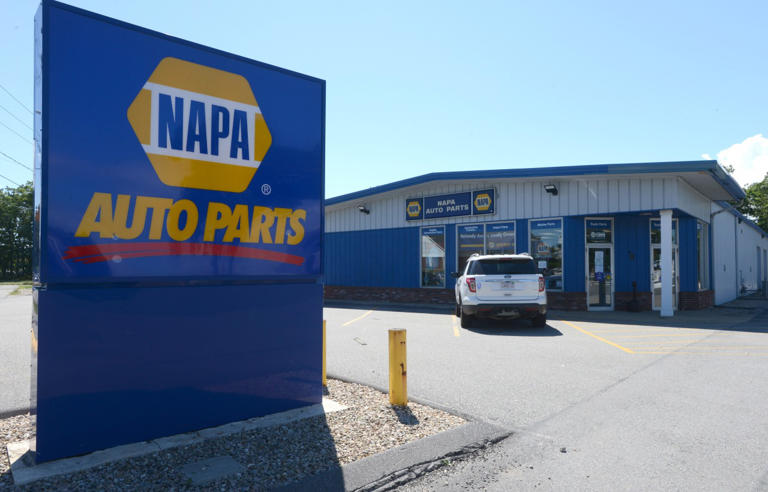
Wed, 14 Jan 2026 15:12:19 -0800 marlon from private IP, post #18534414 /all The collapse of a car-parts supplier puts spotlight on how cash flow can lie https://www.msn.com/en-us/money/topstocks/the-collapse-of-a-car-parts-supplier-puts-spotlight-on-how-cash-flow-can-lie/ar-AA1UbLuz At NAPA owner Genuine Parts, supply-chain-finance obligations were $3.1 billion as of Sept. 30. © USA TODAY/Reuters The old maxim “Buy low, sell high” has a cash-flow corollary: “Collect early, pay late.” But it is possible for companies to overdo a good thing. Sometimes the cash-flow benefits of paying late are so wondrous, at least on paper, that investors might be getting a distorted picture of a company’s financial strength and liquidity. Last fall’s collapse of auto-parts supplier First Brands has brought renewed scrutiny to some long-used financial-engineering techniques, especially in the field known as supply-chain finance. There is also more transparency about them now than just a few years ago because of new disclosure requirements. The takeaway for investors across all sectors: The adage that “cash flow never lies” isn’t true. A company that currently has the ability to pay late might not for long. In that case, a cash hoard could turn into a cash drain, something to watch out for if the economy hits a soft patch. Auto-parts retailers provide some of the clearest examples of how such machinations burnish companies’ numbers. Those include Genuine Parts, O’Reilly Automotive and AutoZone, which had been customers of First Brands. When David Zion, a longtime accounting analyst, recently calculated the boosts from such finance programs on S&P 500 companies’ free cash flow, those three retailers topped the list. Their industry includes hundreds of thousands of stock-keeping units, or SKUs, often sitting in inventory for long periods and made by small manufacturers with less bargaining power than their biggest customers. What happens when debt becomes the business model Supply-chain finance works like this: Suppliers need cash immediately to keep making products. Their customers want to hold on to their cash for as long as possible. Often the buyer will direct the seller to a bank that will quickly pay the seller’s invoice early at a discount. If the seller sought a loan instead, it might have to pay a high interest rate. But with supply-chain finance, the bank will set the discount, or fee, based on the buyer’s credit rating, not the seller’s. If the buyer is a large company with strong credit, the fee often will cost less than whatever financing the seller could get on its own. The financial-reporting benefits for the buyer are many. It gets to classify the amounts it owes under supply-chain-finance programs as accounts payable, instead of debt. That makes leverage on the balance sheet seem lower. The delays in payments boost free cash flow, typically defined as cash flow from operating activities minus capital expenditures. Zion, founder of Zion Research Group, says investors evaluating the quality of a company’s cash flow “are like a judge at a bodybuilding competition: How much credit do you give a company for taking financial-engineering steroids?” At Genuine Parts, which owns the NAPA brand, supply-chain-finance obligations were $3.1 billion as of Sept. 30, equivalent to 51% of accounts payable. That was 24 times as much as its free cash flow over the previous four quarters. Days payable outstanding, or DPOs, for the previous four quarters were 147 days, meaning Genuine Parts was taking almost five months to pay its bills. The median DPO figure for S&P 500 companies using supply-chain-finance programs was 72 days, compared with 47 days for other companies, according to Zion. He said 110 of the companies disclosed such programs, and supply-chain-finance obligations typically were 15% of accounts payable. At O’Reilly Automotive, supply-chain-finance obligations were $5.1 billion, or 72% of accounts payable, and more than three times trailing free cash flow. DPOs were 289 days, or almost 10 months. Similarly, AutoZone’s supply-chain-finance obligations were $5.9 billion, or more than three times free cash flow, while DPOs were 312 days. Such obligations were about 68% of AutoZone’s accounts payable. Other S&P 500 companies with supply-chain-finance obligations that exceed trailing free cash flow include HP, Ball, Mondelez and Stanley Black & Decker. The risk with these finance programs is that lenders could force companies to cut them back if their creditworthiness deteriorates. That would mean having to pay suppliers more quickly. That is what happened to Advance Auto Parts, another retailer. Three years ago, it had investment-grade credit ratings from Moody’s and S&P. Since then, both raters cut it well into junk territory. Advance had to find new banks to replace others that pulled back from its finance programs. That could become a live issue at some point for Genuine Parts, too. In October, S&P downgraded Genuine Parts to BBB-minus, its lowest investment-grade rating, with a negative outlook, citing “elevated leverage.” For investors, it is better to spot the risk early than get surprised late. Not all cash flow is created equal. Write to Jonathan Weil at jonathan.weil@wsj.com Wed, 14 Jan 2026 19:14:59 -0800 doublefriedchicken from private IP Reply #13350139 I talked to that reporter a few months ago. Wed, 14 Jan 2026 19:20:03 -0800 whiteguyinchina from private IP Reply #10223265 Didn't read this yet but Marlon I love your articles thanks Wed, 14 Jan 2026 19:40:20 -0800 marlon from private IP Reply #15622538 yeah only the good stuff, i don't have a sub to the WSJ, but u can find the full article on msn.comReplies require login.