

Found attachment of size 436190.
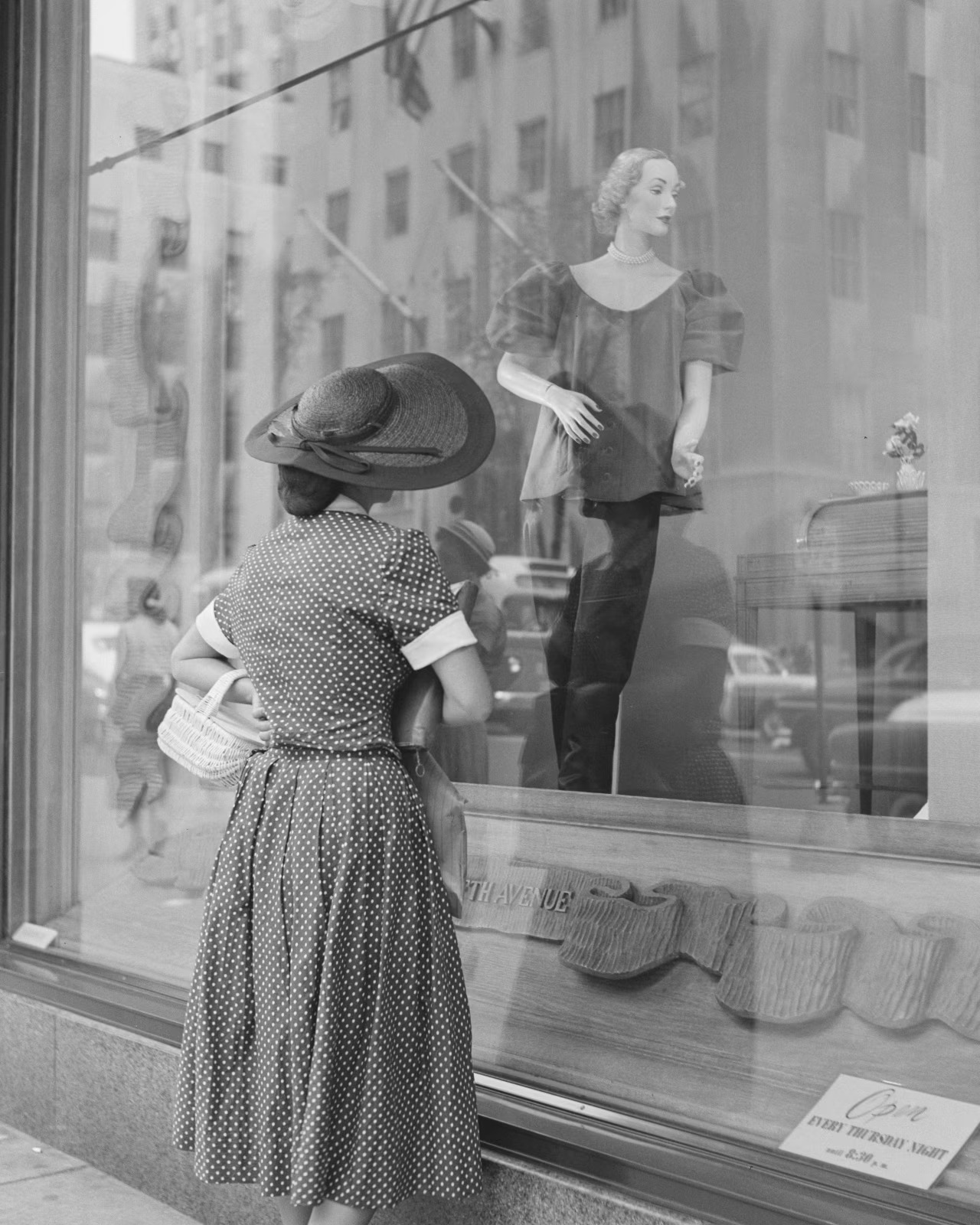
Wed, 14 Jan 2026 22:12:43 -0800 marlon from private IP, post #10939294 /all Inside the mad dash to save Saks, America’s last luxury retailer https://www.msn.com/en-us/money/economy/inside-the-mad-dash-to-save-saks-america-s-last-luxury-retailer/ar-AA1UeVEb https://www.wsj.com/business/retail/inside-the-mad-dash-to-save-saks-americas-last-luxury-retailer-f2e09745?mod=hp_lead_pos9 Chanel’s tab is $136 million. At Kering, the company behind Gucci, Yves Saint Laurent and Balenciaga, the bill is nearly $60 million. And that’s just two of the many brands owed money by Saks Global—a list so long it stretched more than three pages in the bankruptcy filing that landed in a Houston court early Wednesday morning. Even though the parent company of Saks Fifth Avenue, Neiman Marcus and Bergdorf Goodman was plainly veering toward bankruptcy in recent days, the filing was stunning in its sweep and scale. And it made clear why Saks Global’s executive chairman, Richard Baker, couldn’t convince bondholders that he should be the one to lead it through its restructuring. For weeks, Baker—the architect of the $2.7 billion deal that put the two luxury retail heavyweights together just over a year ago—was scrambling to keep his creation afloat. He appealed to equity investors in the deal, including Amazon and private-equity firm Rhône Group, to kick in more capital. His finance team tried to convince executives at Bank of America and other lenders behind a $1.8 billion asset-based loan to loosen some borrowing restrictions. Amazon, Rhône and BofA declined to comment. He sold the land beneath a Neiman Marcus store in Beverly Hills and another in San Francisco for a combined $100 million, almost enough to cover a December interest payment. But it wasn’t enough to persuade vendors who hadn’t been paid in months to keep shipping merchandise. Now, after securing roughly $1.75 billion to help it restructure, Saks Global is the biggest name in high-end retail to file for bankruptcy protection since the pandemic. The filing, in the Southern District of Texas, throws into question the future of America’s last luxury department stores. The bondholders, now in control, pushed out Baker. They have brought in a new team led by former Neiman Marcus CEO Geoffroy van Raemdonck, who sold Neiman Marcus to Baker in 2024 after steering it through its own bankruptcy. Saks Fifth Avenue, shown in 1948, moved into its landmark location in 1924. © Bettmann Archive/Getty Images Shoppers browsed a window display outside the flagship Saks store in 1974. © Walter Leporati/Getty Images For more than a century, Saks, Neiman Marcus and Bergdorf Goodman served as a gateway for U.S. shoppers to discover coveted European brands. While consumers can now turn to the internet and many luxury brands have stores of their own, there’s no experience like browsing a curation of brands all under one roof. Now, many brands wonder if they will ever get paid for merchandise they have shipped. Saks Global’s unsecured trade creditors reads like a who’s who of the fashion industry: Cartier parent Richemont’s tab is $30 million, while Ermenegildo Zegna and LVMH are each owed about $26 million. Some brands aren’t shipping spring clothing, handbags or shoes to Saks. Chanel, Kering and Richemont didn’t respond to requests for comment, and LVMH declined to comment. Zegna said it expects Saks Global to “emerge stronger and continue to be a core partner for the sector.” When Baker closed the deal for Saks to buy Neiman Marcus in December 2024, it was supposed to create a luxury powerhouse that would have more clout with suppliers and reap cost savings. Neiman Marcus was on stronger footing, but Saks had fallen behind paying suppliers. The new Saks Global brought in Amazon, Salesforce and licensing company Authentic Brands Group as investors to help. The company talked of using technology to better understand shoppers and personalize service. But it was hurt by a broad slowdown in demand for luxury goods, inflation and tariffs. A death spiral ultimately did it in: Unpaid suppliers cut shipments. With fewer goods to sell, the company had a harder time bringing in revenue and even less money to pay suppliers. Baker, in an interview, said he still thinks the rationale makes sense. It’s the only way to counter the growing power of brands, which now compete directly with department stores, he said. The deal’s cost savings were expected to total $600 million, and the company was on track to deliver about half of those savings in the first year, well ahead of target. Merging the brands was “the only road forward,” he said. Defining luxury to generations Inside the Saks store in 1956. The retailer got its start in 1867 selling men’s clothing. © Robert Kradin/AP Saks, which started as a men’s clothing store in 1867, was inextricably linked to the glamour of New York City. Rival Neiman Marcus, which got its start in 1907, catered to the oil tycoons of Dallas and other parts of the South. When Saks moved into its storied flagship store in 1924, the upper part of Fifth Avenue was still mainly residential, dotted with the mansions of the Astor and Vanderbilt families. Neiman Marcus’s Christmas Book of lavish gifts—such as a private concert by Elton John for up to 500 guests—became a holiday tradition. Bergdorf Goodman, acquired by Neiman Marcus in the 1970s, once carted over trunk loads of fur coats on Christmas Eve to the apartment of John Lennon and Yoko Ono. Together, the stores defined luxury to generations of Americans. In the 1990s, specialty stores took off at the high end, discount chains at the low, and e-commerce changed shopping. By the 2000s, department stores were facing existential threats. Influencers were introducing young women to brands, taking over the department store’s once coveted role. From real estate to retail In early January, days after Saks missed a make-or-break $126 million interest payment, Baker stepped in to run Saks Global’s daily operations. He would wake up at 4 a.m. at his home in Greenwich, Conn., to talk to European suppliers. Then he would commute with his two Maltese dogs down the Hudson River in his boat to Saks’s Manhattan office. The 60-year-old Baker came to retail through real estate. He worked at his father’s company, National Realty & Development, developing Walmart-anchored shopping centers along the East Coast. In 2005, he formed a private-equity firm to snap up retailers with valuable real estate. A memo he wrote that year listed his targets: Lord & Taylor, Canadian chain Hudson’s Bay, Saks, Germany’s Galeria Kaufhof, and Neiman Marcus. He would go on to buy them all. Each eventually filed for bankruptcy—though not all on his watch. Even though the companies failed, Baker often made money on the real estate. Richard Baker at North Cove Marina in downtown Manhattan © Lanna Apisukh for WSJ To those who paint Baker the villain, he is a destroyer of beloved retail brands. What his critics sometimes forget is that these brands were struggling before he bought them and may well have gone out of business sooner without his financial assistance. “Richard’s intentions were good,” but the headwinds for department stores are tough, said Andrew Rosen, who founded the clothing brand Theory and is an investor in labels such as Alice + Olivia, Rag & Bone and Veronica Beard—which sell to Saks and Neuiman Macus. He added that Baker isn’t the first real-estate guru to get into retailing with disastrous results. “Richard is a genius when it comes to real estate but in retailing, the skills are different.” Baker said he poured $1 billion in cash over the years into renovating the stores he owned, including a $300 million refurbishment of the Saks flagship that included a Rem Koolhaas-designed escalator connecting the ground and second floors. “This narrative that I’m not an operator but rather just a dealmaker is untrue,” Baker said. He points to his acquisitions of Lord & Taylor and Hudson’s Bay. Both, he said, had been expected to be liquidated in months. “Instead, Lord & Taylor operated successfully for 14 years and Hudson’s Bay for 17 years.” Baker is known for peppering his executives with a never-ending stream of ideas. One that would have financial implications down the line was a 2021 split of Saks stores and digital businesses into separate entities. The move was designed to pave the way for a public listing of the digital business. But when the valuations of other digital pure plays collapsed, Saks had to shelve the plan. The companies ended up with duplicative costs, and the businesses were recombined around the time of the Neiman merger, people familiar with the situation said. The colorful escalator designed by Rem Koolhaas inside Saks Fifth Avenue. © Lanna Apisukh for WSJ Outside Saks Fifth Avenue in 2024. © Lanna Apisukh for WSJ Baker said the split allowed him to sell stakes in the stores and digital entities, bringing in a combined $700 million. “Capital got sucked up growing the digital business, and that’s where we became tight with money,” he said. As luxury spending slowed in 2023, Saks started to fall behind on payments to suppliers. Some complained on social media. Others filed lawsuits against the company. A number of them withheld shipments or demanded cash in advance. Jewelry brand Phillips House, which had been selling to Saks for more than a decade, started noticing missed payments in March 2022. By June 2023, Phillips House had stopped shipping to Saks, said Derek Frankel, a director of the brand. Frankel spoke by phone to Saks’s finance chief, who told him summer sales had been challenging but that payments would happen in the fall. Still, none arrived. In a September 2023 email to Saks’s finance chief, he wrote: “It remains unclear to me what justification Saks is relying on to leave these balances unpaid?” Days after Phillips House filed a lawsuit that November, Frankel said, Saks agreed to pay the full amount owed—roughly $53,000. “They kept missing their own deadlines,” Frankel said. “Then they’d say we needed to have faith in them. But we couldn’t keep blindly trusting them.” Emails to Saks asking about owed payments often went unanswered or were met with a runaround, said Emiliano Shnitzer-Bartocci, vice president of CTE Watch Co., which distributes Timex watches and Ray-Ban sunglasses among other accessories. “It was a ping-pong ball: We’d get an answer from one person to talk to someone else in another department.” In a Valentine’s Day memo, then-Saks CEO Marc Metrick notified suppliers that Saks was changing its payment terms to 90 days from the usual 60. Any past-due payments would be stretched out in 12 installments starting in July. The expanded designer-shoe floor at Saks in 2007. © Timothy A. Clark/AFP/Getty Images A shopper looking through sale items during the 2007 holiday season. A shopper looking through sale items during the 2007 holiday season. © Mario Tama/Getty Images Metrick said he hoped the move would clarify and smooth things over: “To that end, we are looking forward to seeing the flow of merchandise return to normal levels,” he wrote. Instead, suppliers were livid. Metrick, who stepped down in early January, declined to comment. By the summer, Saks was in arrears with more suppliers. Burberry would slow shipments to Saks once it reached its credit limit and then resume sending goods when Saks paid down the balance, one of the people said. Payments owed to vendors would swell to hundreds of millions of dollars. Burberry, which didn’t respond to requests for comment, is owed $9.5 million, according to the bankruptcy filing. As a multinational conglomerate, Baker’s holding company could move cash from one part of the empire to another. Over the years, money was funneled from Hudson’s Bay to support the U.S. businesses and then when Hudson’s Bay was struggling after the pandemic, money from the U.S. went to support the Canadian chain. “In retrospect, would we have been better off not sending $300 million to Canada?” Baker said. “Yes. But that was a very valuable business for us in Canada and it was logical to support it.” Alarm bells went off among suppliers and creditors when Saks Global scrambled to raise cash to meet a June debt payment. It got a $600 million infusion from bondholders. But the proceeds weren’t sufficient to catch up on payments to suppliers and restore the flow of inventory ahead of the holiday season, according to the bankruptcy filing. On top of that, system-integration glitches disrupted inventory receipts at Neiman Marcus and Bergdorf Goodman in the critical run-up to the holiday season. In the second half of 2025, the company had $550 million less inventory to sell than it had forecast, the filing said. For the three months that ended Aug. 2, sales fell 13% from a year earlier to $1.6 billion. The net loss widened to $288 million. Holiday displays lit up Saks last month. © Victor J. Blue/Bloomberg News With less merchandise on its store racks and in its warehouses, the company couldn’t borrow as much under its asset-based loan, which is backed by inventory. In December, Saks’s asset-based lenders increased reserve levels and took other measures that constrained the company’s borrowing capacity. It was, the filing said, a “perfect storm.” Hilldun, a New York financing company that backs trendy fashion brands such as Isabel Marant, L’Agence and Golden Goose advised its clients in December to hold shipments of spring merchandise to Saks because the retailer had reached its credit limit. Saks Global owes Hilldun $66.5 million, Gary Wassner, Hilldun’s CEO, said. “In most chapter 11 situations, they’ll only get paid a fraction of what they’re owed,” Wassner said. Saks accounts for as much as 40% of some brands’ wholesale business, he said. Westport, Conn.-based stylist Lucia Gulbransen, who scours stores and the internet for new items for clients, noticed the flagship Saks location on Fifth Avenue was light on coats and party dresses during the recent holiday season compared with other retailers. “They didn’t have the ‘wow’ pieces,” she said. Rivals are doing well. Nordstrom and Bloomingdale’s have crept further upmarket into what was once Saks’s turf and have logged strong sales in the past year. In a chapter 11 bankruptcy, stores keep operating, though some locations close and companies restructure. Then bondholders look to sell. Saks—people close to Baker said—would be just the kind of asset he finds irresistible. Write to Suzanne Kapner at suzanne.kapner@wsj.com and Chavie Lieber at Chavie.Lieber@WSJ.com Fri, 16 Jan 2026 20:38:58 -0800 zerosugar from private IP Reply #11536129 Saks went downhill with their return policies changing. People want flexibility.Replies require login.