

Found attachment of size 115974.
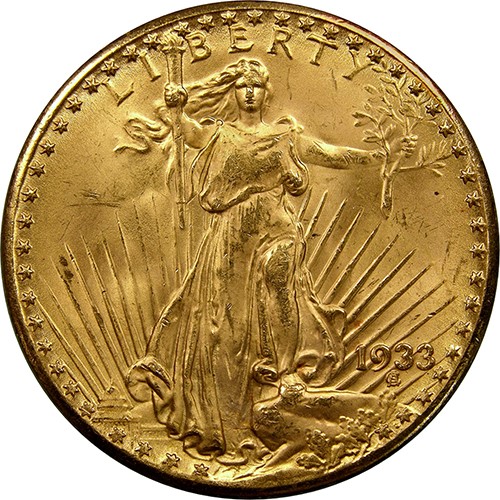
Sun, 01 Feb 2026 00:41:49 -0800 marlon from private IP, post #10959963 /all the 1933 Double Eagle https://www.ngccoin.com/news/article/9064/1933-double-eagle/ The One That Got Away: In June, the Only 1933 Double Eagle That Can Be Owned Will Be Sold Posted on 5/4/2021 Incredibly, the sole 1933 Double Eagle in private hands will cross the auction block raw. NGC has, however, certified 10 others for the US Secret Service that will never be offered for sale. Today, most collectible coins are certified before they are sold at auction. The complete process of certification — authentication, grading and encapsulation in a protective holder — boosts buyer confidence, precipitates competitive bidding and ultimately results in higher prices realized. Yet, one particular coin of utmost importance and value, and with legendary status due to the story behind its existence, will cross the auction block raw, i.e. not encapsulated, in June. It is the one that got away — from the President of the United States, the Secret Service and the US Mint, making it the only 1933 Double Eagle that can be legally owned. It seems to be the nature of this 1933 Double Eagle to fly under the radar, even while being on everyone’s radar. When Sotheby’s announced that the coin would be offered at auction on June 8, 2021, it took everyone by surprise. This highly coveted prize has been off the market since its one and only public sale in 2002, and not until now has it been revealed that the buyer was Stuart Weitzman, a famous fashion designer and collector of precious objects. The sole 1933 Double Eagle in private hands. (Image: Sotheby's) Click images to enlarge. Of the 14 examples known to exist, why is this the only one that may be owned by a private individual? The other 13 coins are all in the government’s possession: Two are in the Smithsonian Institution’s National Numismatic Collection, and the remaining 11 are property of the US Mint. None of these coins will be sold or otherwise deaccessioned, so there is just the Weitzman example for collectors to dream of acquiring. It brought over $7 million when it was sold in 2002 — a record at the time — and it is anyone’s guess how much it will realize this year. Sotheby’s estimate is $10 million to $15 million. In accordance with the wishes of Sotheby’s and Stuart Weitzman, the coin will be sold unencapsulated. On April 6, however, Sotheby’s arranged a viewing of the coin for Mark Salzberg, Numismatic Guaranty Corporation® (NGC®) Chairman and Grading Finalizer. His video analysis of the coin can be viewed here: “Viewing the sole 1933 Double Eagle in private hands was, of course, exciting, but also bittersweet,” comments Salzberg. “Like seeing an animal that is on the brink of extinction, you want to protect it and let others know how important it is to preserve it. I graded this coin as a Gem example, and it should be formally certified and encapsulated for posterity. NGC would welcome the opportunity to do so.” A caged bird The long drama attached to the 1933 Double Eagle, and this example specifically, begins, not surprisingly, in 1933. In the first months of that year, the Philadelphia Mint produced two deliveries of $20 gold coins — commonly called Double Eagles — for a total mintage of 445,500 pieces. While gold coins had not been seen in general circulation since the 1910s, they remained available from banks by request and were entirely legal to own. The nearly half million 1933 Double Eagles were never released, however, because soon after Franklin D. Roosevelt was inaugurated on March 4, 1933, he issued a recall of gold coins, designed to prevent hoarding (in the US and overseas) and to bolster the government’s gold reserves so that it could freely issue currency and fund the New Deal. All but the two examples transferred to the Smithsonian were melted, or so it was thought… 1933 Double Eagle in the Smithosonian collection. (Image: Tom Mulvaney) Click images to enlarge. Over the years, several examples saved from destruction came to light. Their source later proved to be a jewelry store owner named Israel Switt. No documentation of how he obtained the coins survives, but it is believed that a Philadelphia Mint employee made several one-for-one switches of common date Double Eagles for the rare 1933 pieces. While the government suffered no net loss of gold, possession by individuals of the coveted rarities became a sore point for the Secret Service, which set about recovering all of the 1933 Double Eagles in the wild, starting with the first confiscation in 1944. Books have been written about this affair, but the pertinent point is that all owners of 1933 Double Eagles were tracked down over the next few years and compelled to turn over their coins. In the few cases brought to court, all were ruled in the government’s favor, and it became conventional wisdom in the numismatic community that ownership of a 1933 Double Eagle would be forever outlawed. Ultimately, some nine examples were seized, and the last of these was melted in 1956. Collectors would have to be content viewing the two examples in the Smithsonian collection — or so it seemed. The sole of the matter In 1996, a British coin dealer was detained for attempting to secretly sell a 1933 Double Eagle to a US dealer. Federal agents interrupted the transaction, and for the next several years, the US Mint negotiated with the British dealer over the legality of possessing the coin. Finally, the US Mint acknowledged that this coin had been legally sold to King Farouk of Egypt during 1944, as the US government’s own export license was on file. Officially a free agent, the coin was able to be sold in 2002 to Stuart Weitzman for $7,590,020, with the proceeds split between the dealer and the US Mint. A provision accompanied the sale stating that this example was to remain the only one legal for individuals to own, and a symbolic transfer of $20 was made to the US Mint director at the time to “monetize” it. As a result of the dealer’s success, but despite this well-published restriction, in 2005, the daughter of Israel Switt, the original purveyor of 1933 Double Eagles, announced that the family possessed no fewer than 10 examples! Her name was Joan Langbord, and the 10 became known as the Langbord coins. She hoped the new legal status of the example pedigreed to King Farouk would carry the day with her family’s coins as well. But there was no paper trail for the Langbord coins, let alone an export license, and when the family loaned the 10 to the US Mint to have them authenticated (in a gesture of good faith), they were declared contraband and seized as government property illegally removed from the Mint. In a trial followed by several appeals, the Langbord family saw their hopes rise and fall, only to lose ownership once and for all after an 11-year legal battle. During the legal proceeding, in November 2009, the US Mint requested that NGC certify the Langbord coins to verify their authenticity and condition. A select team of NGC graders assessed the 10 coins: one piece graded Uncirculated Details; six received the grade NGC MS 64; two were graded NGC MS 65; and the finest example graded NGC MS 66. Upon completion, all 10 coins were encapsulated in NGC’s re-closable museum holder with a unique serial number and certificate of grade. Three of the Longbord coins graded by NGC. Click images to enlarge. Of the project, Salzberg says, “NGC is honored to have been asked to certify these coins on behalf of the US Secret Service. It was a thrilling experience and, along with the Secret Service, we recognize the important role that certification plays in the proper stewardship of these numismatic treasures. The coins are now properly identified and authenticated, and they reside in holders in which they can be safely handled.” Regarding the 10 Longbord coins, and an eleventh example recovered by the US Mint in 2018, US Mint Director David J. Ryder has stated the Mint’s position: “The United States Mint considers all recovered 1933 Double Eagles to be national numismatic treasures and will preserve them. The Mint does not intend to monetize, issue or auction these pieces. Rather, the Mint continues to assess the best way to preserve and secure and use these historical artifacts, including possible public exhibits, to educate and share the specimens with the American people.” And so, definitively, the 1933 Double Eagle that will be auctioned in June is the sole example that can be bought, sold and owned by an individual, and ever will be — a defiant coin if ever there was one. Mon, 02 Feb 2026 15:44:48 -0800 phosita from private IP Reply #18543294 AI sharticle. Nice lookin' coin, though, if that's real.Replies require login.