

Found attachment of size 108287.
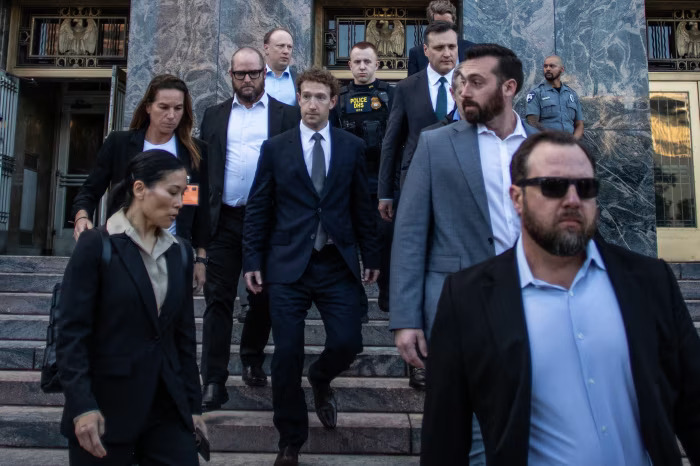
Thu, 26 Feb 2026 16:28:39 -0800 marlon from private IP, post #14823232 /all Woman suing Meta, YouTube over social media addiction expected to take stand at trial why does Zuck need to how up in court for this? https://www.wsj.com/tech/woman-suing-meta-youtube-testifies-its-too-hard-to-be-without-social-media-318f85ed?mod=hp_lead_pos11 https://www.msn.com/en-us/money/markets/woman-suing-meta-youtube-over-social-media-addiction-expected-to-take-stand-at-trial/ar-AA1X8IER Woman suing Meta, YouTube over social media addiction expected to take stand at trial Plaintiff Kaley G.M. arrives to take the stand at a trial in a key test case accusing Meta and Google's YouTube of harming children's mental health through addictive social media platforms, in Los Angeles, California, U.S., February 25, 2026. REUTERS/Mike Blake © Thomson Reuters Feb 26 (Reuters) - A California woman is expected to testify in court on Thursday about how using Meta Platforms' Instagram and Google's YouTube as a child harmed her mental health, as her landmark trial in Los Angeles continues. Plaintiff Kaley G.M. arrives to take the stand at a trial in a key test case accusing Meta and Google's YouTube of harming children's mental health through addictive social media platforms, in Los Angeles, California, U.S., February 25, 2026. REUTERS/Mike Blake © Thomson Reuters The plaintiff, known as Kaley G.M. in court, began using Instagram at age 9 and YouTube at age 6 and says the platforms contributed to her depression and body dysmorphia. The companies sought to profit by hooking young children on their services despite knowing social media could harm their mental health, her lawyers say. Plaintiff Kaley G.M. arrives to take the stand at a trial in a key test case accusing Meta and Google's YouTube of harming children's mental health through addictive social media platforms, in Los Angeles, California, U.S., February 25, 2026. REUTERS/Mike Blake © Thomson Reuters Kaley G.M.'s testimony comes a day after her former psychotherapist said adolescent social media usage was a "contributing factor" to her mental health issues. The case is part of a broader global backlash against social media companies over alleged harms to children and teens. Australia has banned under-16s from such platforms, and other countries are considering similar restrictions. YouTube and Meta have denied the allegations and said evidence in the case does not support the woman's claims. The therapist was called by lawyers for the plaintiff to set the stage for the next phase of the trial, exploring whether and how Kaley's engagement with social media as a child affected her well-being. The beginning of the trial focused on what the companies knew about how social media affects children, and their business strategies related to younger users. Meta CEO Mark Zuckerberg testified the company discussed but never launched products for children. To win the case, Kaley's lawyers must show that the way the companies designed or operated the platforms was a substantial factor in causing or worsening her mental health issues. (Reporting by Courtney Rozen in Washington, Jody Godoy in New York and Steve Gorman in Los AngelesEditing by Rod Nickel) Thu, 26 Feb 2026 17:10:51 -0800 zerosugar from private IP Reply #10561076 It's really nobody's fault that she was bored so stayed online. Still, give her mad props for being creative with a lawsuit. Fri, 27 Feb 2026 15:53:25 -0800 whiteguyinchina from private IP Reply #12882648 Given how awful social media etc is for children's cognitive abilities and psychological wellbeing i am surprised this has just happened. Wed, 25 Mar 2026 18:29:48 -0700 marlon from private IP Reply #11332869 https://gizmodo.com/meta-and-google-lose-landmark-case-on-social-media-addiction-2000738131?utm_source=fark&utm_medium=website&utm_content=link&utm_campaign=fark&ICID=ref_fark https://www.wsj.com/tech/meta-and-youtube-lose-landmark-social-media-trial-33e4c5cb?mod=hp_lead_pos2 LOS ANGELES—A 20-year-old woman prevailed in a landmark social-media trial against Meta Platforms META 0.33%increase; green up pointing triangle and Google’s YouTube in which the companies were accused of designing their apps to be addictive and harmful to adolescents. A jury found Instagram’s owner Meta and YouTube negligent for operating a product that harmed kids and teens and failed to warn about those dangers. The decision dealt a blow to the companies that have historically been shielded by Section 230 of the Communications Decency Act. Thu, 26 Mar 2026 05:10:58 -0700 whiteguyinchina from private IP Reply #18589467 Anyone with kids knows that shit is addictive and harmful JdU on the other hand is pure liberal arts high end shit Thu, 26 Mar 2026 05:11:11 -0700 whiteguyinchina from private IP Reply #10070961 Philosopherkingshit Fri, 19 Jun 2026 22:43:08 -0700 marlon from private IP Reply #19965105 https://finance.yahoo.com/media-advertising/articles/exclusive-meta-lobbies-congress-protection-200438756.html Exclusive-Meta lobbies Congress for protection from child-harm lawsuits Meta, Google fund kids safety lessons that overlook how platforms hook users · Thu, June 18, 2026 at 4:04 PM EDT 3 min read 4 By Jody Godoy June 18 (Reuters) - Meta Platforms has lobbied the U.S. Congress for legal immunity from child-harm claims tied to social media products such as Instagram, as it faces thousands of lawsuits from young users and their families, according to a source familiar with the matter and proposed legislative language reviewed by Reuters. More from Yahoo Scout What is the current status of KOSA legislation? What specific platform features would KOSA regulate? How would KOSA immunity affect existing child-harm lawsuits? What legal immunity is Meta seeking from Congress? If adopted by lawmakers and passed into law as part of the Kids Online Safety Act (KOSA) under consideration in the U.S. Senate, such a provision could undermine thousands of lawsuits against Meta and other online platforms over harms to children. Meta and Google's YouTube face a combined $6 million in damages after they lost the first case at trial early this year. While legislators have given no indication of adopting the language, the lobbying effort shows the kind of legal protections Meta is seeking amid the biggest attempt to regulate online platforms in the U.S. since the 1990s. The proposed language reviewed by Reuters would make online companies "immune from suit or liability under state law with respect to all claims for loss caused by, arising out of, relating to, or resulting from the safety or privacy of individuals under the age of eighteen online or otherwise related to the provisions" of KOSA. The provision appears alongside language that would preempt state laws on children's online safety and privacy. Asked about the lobbying effort and the proposed language, Meta spokesperson Stephanie Otway said the provision "does not extinguish existing lawsuits, nor does it represent blanket immunity." "Instead, it establishes uniform national standards for online youth safety, ensuring these critical issues are governed by comprehensive federal legislation, not plaintiffs' lawyers or patchwork state legislation," she said. Julia Duncan of the American Association for Justice, a group that represents trial lawyers, said that if passed, however, the provision would knock out any lawsuits pending when the law took effect. "The language is pretty clear-cut immunity against every parent, every school district, that is seeking to hold any AI or social media company accountable for harm" to children, Duncan said. "There is no other way to read this language." Meta has proposed the language in exchange for dropping its opposition to KOSA, the source said. The bill, sponsored by U.S. Senators Marsha Blackburn, a Republican, and Richard Blumenthal, a Democrat, would require social media companies to take reasonable steps to prevent certain harms to minors, such as compulsive use of their platforms. The bill is now part of negotiations between Blackburn and the White House to package child online safety bills with a provision that would preempt some state laws on artificial intelligence. A Blackburn spokesperson, asked about the specific liability provision reviewed by Reuters, said: "We have not seen that proposed language and would never consider it." Under KOSA, companies would be required to exercise care in deploying specific features including infinite scrolling, activity notifications and appearance-altering photo filters. A California woman won at trial against Meta and YouTube earlier this year when her lawyers argued the companies knew such features were addictive and harmful to youth. The companies plan to appeal against the decision. KOSA passed in the Senate in a 91-3 vote in 2024, but failed in the U.S. House of Representatives. It was reintroduced this year with support from both U.S. Senate Majority Leader John Thune, a Republican, and U.S. Senate Minority Leader Chuck Schumer, a Democrat. (Reporting by Jody Godoy in New York; Editing by Chris Sanders and Edmund Klamann) Sat, 20 Jun 2026 07:54:32 -0700 whiteguyinchina from private IP Reply #13514360 Its like the vaccine industry We cant protect children if we aren't protected from lawsuits when we accidentally kill children Yea okReplies require login.