

Found attachment of size 205170.
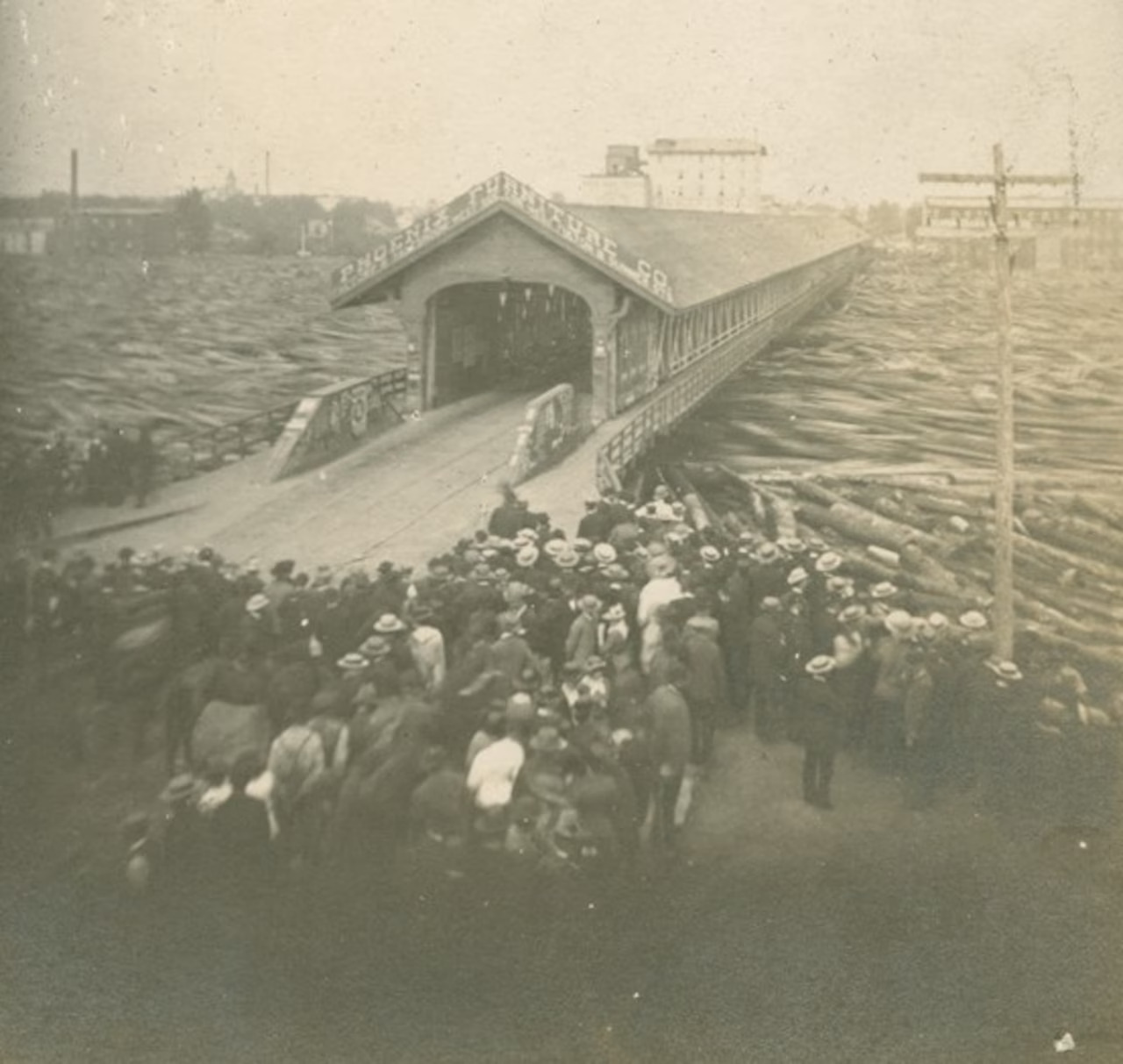
Sat, 28 Feb 2026 15:37:20 -0800 marlon from private IP, post #10506971 /all the Great Log Jam of 1883 betcha never heard of this *sniffle* https://www.mlive.com/news/grand-rapids/2026/02/how-west-michigan-survived-the-great-log-jam-of-1883-that-destroyed-bridges.html How West Michigan survived the ‘Great Log Jam’ of 1883 that destroyed bridges Published: Feb. 28, 2026, 7:45 a.m. Two weeks of record-setting rains had raised the Grand River to flood stage, leading up to the historic log jam. (Photos/Grand Rapids Public Library History Center) By Skyla Jewell-Hammie | SJewell-Hammie@mlive.com GRAND RAPIDS, MI - On the morning of July 26, 1883, over 600,000 logs broke loose, rushing through the Grand River and tearing out every railroad bridge in Grand Rapids. It all started two weeks prior. Heavy rains in June and July 1883 brought water levels on the river to record highs and overwhelmed lumbering booms (river enclosures used to sort and organize logs) for transport to saw mills in Lowell, Grand Rapids, Grand Haven and Robinson townships. When lumbermen tried to take advantage of the high water to float their logs downstream, a seven-mile log jam formed above the Grand Trunk Railroad Bridge, two miles north of downtown. The jam that eventually broke loose is known as one of the most devastating events in the city’s history, according to the Historical Marker Database. The following retelling of events in the summer of 1883 is part of an ongoing series that details key parts of Michigan’s history. Preparing for the worst The first warning received of the possibility of danger came in late June, weeks before the disaster, as stated in an excerpt from “The Great Log Jam” by Stewart Edward White, an author who lived in the Grand Rapids area. Reports at the time stated water levels on the river had risen 18 inches, causing jams in Ottawa County and in Grand Rapids. Due to the rainfall, three workers from White & Friant Lumber Company were tasked with managing enclosures that contained pine logs. The main enclosure occupied half the channel for over two miles, supplemented at the upper end by a 150-foot floating section of logs, closing access to the river. This swing gate was operated by a winch and chain system, similar to a clothesline running between two houses. The logs of sawmills in Nortonville, Spring Lake, Ferrysburg and Grand Haven were awaiting sorting and distribution. Above the main enclosure, various temporary enclosures had been put in to accommodate the extra timber that accumulated during the dry season. Pile drivers, steam-powered barges that pounded pilings into the river bottom, were used to extend the floating swing gate. As the water rose, the logs escaped the enclosures, much like cattle fleeing stockyards. When the workers reached their pile driver, they found that the river in Kent and Ottawa counties, which connected to the Stearns Bayou, had already swelled. A man stood all night at the swing gate, reporting at intervals the progress of the water as it crept up the piles. By morning, it was near the top. It was decided to raise the enclosure’s height by tying logs to the bolted timbers and securing other weak spots. In the meantime, other workers stretched 15-inch manila rope cables across the logs to ensure the current wouldn’t take them at the downstream end of the enclosure. “Although the water was boiling through at mill-race speed, affairs were going well,” said White. However, while a solution was being reached in the Grand Haven area, the Grand Rapids enclosures had broken. One hundred million feet of logs were rushing downstream to jam at the Detroit and Milwaukee railroad bridge. Nothing could prevent the jam from sweeping away the lighter structures downstream. A race against time Within a matter of minutes, the jam carried away the elaborate enclosures as though they had been made of straw, according to White. All that work completed days before had been short-lived. For four days and nights, tons of logs pushed steadily through the Grand River. Seventy-five men worked on manmade obstructions to prevent more destruction of bridges. “The groaning and creaking of the mass was said to be especially terrifying,” White said. On the morning of July 26, 1883, Grand Rapids residents watched for two hours as the logs roared by. The Detroit, Grand Haven and Milwaukee railway bridge collapsed from the pressure of logs, causing thousands of logs to rush underneath the Leonard Street, Bridge Street and Pearl Street bridges. The Grand Rapids and Indiana Railroad bridge and the Chicago and Milwaukee bridge were destroyed. The mass of logs jammed against the Michigan Southern Railroad Bridge upstream of Grandville, creating a makeshift dam. The water spewed over riverbanks onto surrounding farmland and lessened pressure on the river. The city at the time worried the entire mass would flow to Lake Michigan. But before that could even happen, one-armed John Walsh, with White & Friant Lumber Company, operated a steam-powered pile driver and stepped in with a daring solution. According to the Grand Rapids Historical Commission, Walsh was credited with breaking the log jam, which amounted to 150,000,000 board feet of timbers. A marine engineer, Walsh came up with a plan to drive pilings, which created an obstacle, stopping the 37 million tons of logs and saving the timber. He was there for one thing: drive piles in the right places, according to White. The main difficulty was that the flood was denied an outlet because of the logs jammed in its bed. Already, although the pressure was but slightly relieved by it, the river had begun to spread, carrying many of the upper logs past the jam to the lake. With more logs streaming down the Grand River because of flooding in Grand Rapids and Lowell, the Ottawa County Boom Co. ordered a 35-foot-wide channel dredged from the Grand River to Stearns Bayou. The plan was to dig a new channel for the river around the jam. No lives lost According to The Grand Rapids Herald, the number of logs trapped in the river was so large that, placed end to end, the logs would have encircled the earth once and still gone an additional 3,000 miles. Grand Haven and Spring Lake Village alone had 26 saw mills dotting the river and bayous to produce lumber. The economic survival of the area depended upon a successful annual log run. Fortunately, no one was critically injured — but the same could not be said for the region’s timber industry and infrastructure. Property damages and timber losses are estimated at over $500,000, according to the Grand Rapids Historical Commission. By late July, logs and water are diverted into a channel leading to Sterns Bayou in Ottawa County. The enclosure there holds, according to the Grand Rapids Public Library History Center. Many of the logs streaming from Grand Rapids were dispersed by flood waters over submerged farm fields. Crews spent the rest of the summer retrieving timber. It’s reported that “The Great Log Jam of 1883″ was a major disaster for post-Civil War West Michigan and could have ruined the area’s lumber-based economy. Within a few years of the log jam, the Grand River lumbering industry began its decline. Sun, 01 Mar 2026 07:34:43 -0800 phosita from private IP Reply #18374302 👍 This for some reason reminded me of a broadcast storm. https://en.wikipedia.org/wiki/Broadcast_stormReplies require login.
@18374302 Andy 👍