

Found attachment of size 121517.
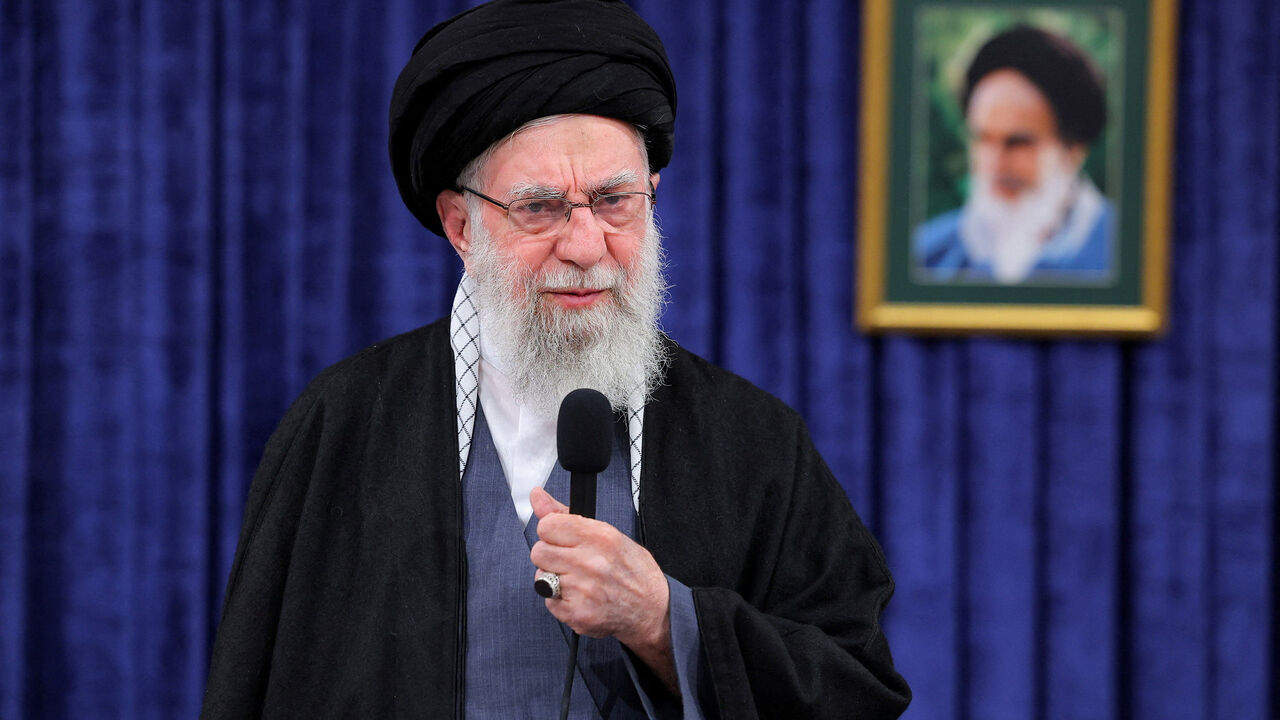
Mon, 02 Mar 2026 21:38:38 -0800 zerosugar from private IP, post #18701920 /all Ayatollah Khamenei Does anybody else feel sort of bad that they murdered him? Not trying to defend the Iranian government or anything, but he was an elderly man of 86 who didn't have many years left anyway. Sad! His wife who was elderly too was also killed. Many Westerners think life was perfect under the Shah, but obviously there were issues too or the 1979 revolution would not have happened. Mon, 02 Mar 2026 21:42:19 -0800 zerosugar from private IP Reply #13372644 I also don't even get why Israel and Iran are enemies. Most Palestinians are Sunni and care less about Iran even if Iran supports them. I really have no clue why Iran, Assad, and Hezbollah were so intent on fighting Israel for Palestine when most Palestinians loathe them for being Shia or Alawite or whatever. lol. I definitely don't get why the West (aside from all that happened with the hostage crisis in the 1970s) hate Iran. 911 and all terrorist attacks in the West have involved Sunni/Wahhabi militants. None have involved the Shia. Even if they are fighting Israel, well they aren't fighting the West aside from perhaps spreading anti western propaganda. Mon, 02 Mar 2026 21:45:29 -0800 zerosugar from private IP Reply #13235127 The Shia are also like only 10 percent of Muslims and you would think they would sort of be more like the Druze and be on Israel’s side in since they are all minorities in a sea of mostly Arab Sunnis. Mon, 02 Mar 2026 22:32:54 -0800 marlon from private IP Reply #13681932 https://www.wsj.com/podcasts/the-journal/what-next-for-iran/b0baefb5-c040-4216-a845-45b2f2bce428 What's Next for Iran? After a joint U.S. and Israeli military campaign against Iran killed Supreme Leader Ayatollah Ali Khamenei, Iran has launched its own strikes in return. Now, the Middle East is on a path to a broader regional war. WSJ’s Sune Engel Rasmussen explains the Iranian regime's existential fight and how its retaliation is drawing in countries around the region. Jessica Mendoza hosts. Further Listening: - The Bank Collapse Behind Iran's Protests - Trump's 'Donroe Doctrine' on Foreign Policy Sign up for WSJ’s free What’s News newsletter. Full Transcript This transcript was prepared by a transcription service. This version may not be in its final form and may be updated. Jessica Mendoza: It's almost three days into the US and Israel's massive military action against Iran, with 2,000 targets hit since the strikes began. So far, more than 550 Iranians have been killed according to the humanitarian organization, The Red Crescent. And Iran has hit back with force. Here's our colleague, Sune Rasmussen. Sune Rasmussen: Almost immediately after the attacks started over the weekend, we saw Iran responding by attacking Arab countries in the Gulf. In fact, they've attacked every single country in the Gulf. Audio: Charlie and many others in Israel took cover as air aid sirens rang out after Tehran vowed revenge for the killing of its Supreme leader. Explosions have so far been reported across several US air bases in the region, including in Bahrain, Jordan, and the United Arab Emirates. Jessica Mendoza: Several deaths have been reported after those Iranian strikes, including in Israel and the United Arab Emirates. Sune Rasmussen: And I think that's to show both the US, Israel, the world, and to show the neighbors in the Middle East that if Iran is attacked, they want to show the countries in the region that they can't attack Iran without ramifications. If there's a long-term, full-blown war in Iran, that's obviously very dangerous for the Iranian people. And if things escalate and Iranians rise up, then there is an increased risk for the Islamic Republic of being toppled. Well, right now, the Iranian regime is fighting for its survival. The US and Israel just killed the supreme leader and dozens of his military commanders, and the regime is genuinely at risk of falling. So for them, this is an existential fight for its life. Jessica Mendoza: Welcome to The Journal, our show about money, business, and power. I'm Jessica Mendoza. It's Monday, March 2nd. Coming up on the show, war in the Middle East with Iran at the center. Why did the US and Israel choose this specific moment to strike? What was the catalyst that triggered this weekend's operation? Sune Rasmussen: The US wanted Iran to seize all enrichment of uranium. Iran says as a sovereign nation, it has the right to develop nuclear power for civilian purposes, but the nuclear program has always been a subject of controversy internationally, which is why they've been negotiating over it. The official reason Trump gave for attacking Iran was that he had lost patience with the ongoing negotiations and he didn't believe that Iran was moving or moving fast enough to give the concessions that the US wanted. Jessica Mendoza: According to Wall Street Journal reporting, Saturday in particular presented US and Israeli intelligence with a rare opportunity. Iranian military and political leaders were holding a meeting, one that included Iran's Supreme leader, Ayatollah Ali Khamenei. The US and Israel struck in full daylight with Israeli jets dropping a host of munitions on Khamenei's compound. Khamenei was killed in that strike, along with several top government and military advisors. According to Iranian state media, the strikes also damaged residential buildings, medical facilities, and also hidden elementary school in Southern Iran with a death toll of at least 148. With Khamenei's death, Iran has found itself in a moment of transition. Sune Rasmussen: Ali Khamenei was in power for 37 years. In Iran, he was the longest sitting Middle Eastern ruler by quite a distance. And he leaves behind an Iran that is much stronger than when he took over. When he took over in 1989, Iran was emerging from a devastating eight-year war with Iraq and a revolution that preceded it, so it was close to bankruptcy and it was recovering from a lot of violence. Through the '90s he and his government managed to spur economic growth. And over the decades, he turned Iran into a military power in the Middle East that his enemies really had to contend with. But Khamenei also leaves a regime that's under unprecedented pressure from its population. This vision of an Islamic society, an Islamic republic that Khamenei and his peers had after the 1979 revolution, that is a vision that has increasingly alienated Iranians, both because they think he's out of touch with modern times, but also because of, frankly, the violence that the Islamic Republic has imposed on his own population and people who didn't support that vision in order to keep them in check. So he leaves behind an Islamic Republic under pressure. Jessica Mendoza: That pressure was on display in December when a financial crisis led to huge protests throughout the country. Khamenei's security forces responded with a brutal crackdown, killing thousands of Iranian citizens. At the time, President Trump threatened to take action against the government. Donald Trump: And I've canceled all meetings with the Iranian officials until the senseless killing of protestor stops. And all I say to them is help is on its way. You saw that I put that... Jessica Mendoza: After this weekend's strikes began, Trump posted videos telling the Iranian people that this moment is their once in a generation chance to take down the regime. Donald Trump: When we are finished, take over your government. It will be yours to take. This will be probably your only chance for generations. Jessica Mendoza: Sune, is there a sense that Iranians are gearing up for a popular uprising against the regime? Sune Rasmussen: No, not yet. I don't think we should expect that as long as bombs keep raining from the skies over to Iran. We shouldn't expect Iranians to take matters into their own hands and immediately topple the Islamic system that has been in place for nearly 50 years. To have a successful revolution, you need several things, but two things that you historically have needed is on the one side, you need a regime that's fracturing and weakening with defections, things like that. We haven't seen that in Iran, even during the worst protest or the worst crackdown on protestors here in January. And then on the other side, you need an opposition that is organized behind a common goal, which they have in this case, but also with a leader. And in the case of Iran, they might also need weapons. And we haven't seen any signs of those two things coming to bear yet in Iran. I'm not aware of any historical president where a regime has been toppled by airstrikes alone. Jessica Mendoza: So if regime change isn't likely, what does Iran's government look like right now? Who's in charge? Sune Rasmussen: So when we talk about the Iranian regime or the system, the Islamic system, it's important to understand that that's both the supreme leader, it's a government, there's a parliament, there's a military. And in the military, you have the Islamic Revolutionary Guard Corps, the IRGC. So there's a lot of different power centers in what we call the regime. The entire Islamic system remains still. The Iranian leadership has always known that if too much power and authority was concentrated in one person or even a dozen people, that would make it vulnerable to decapitation. And that's what we see now. Jessica Mendoza: Already, the Iranian government has begun the succession process to find a new leader to replace Khamenei. Sune Rasmussen: In these American Israeli strikes, dozens of important and high ranking military commanders have been killed, political officials as well. And decision making in Iran doesn't really seem to have slowed down. I'm not suggesting here that the killing of Khamenei is not going to change Iran, it definitely will. But as we can see in the way that Iran immediately retaliated to these attacks and continues to do so, there are a lot of people who know what to do in a situation like this and are involved in decision making. Jessica Mendoza: What Iran's response could mean for the rest of the Middle East is up next. In its efforts to retaliate, Iran has targeted hotels, ports, and airports in the Gulf Arab states. It struck oil and gas facilities in Saudi Arabia. And in the UAE, it killed three people and injured dozens. Sune Rasmussen: So Iran's response so far has been to go after countries in the Middle East that it perceives to be allied or helping the US. Jessica Mendoza: Sune, what is Iran's strategy here? Sune Rasmussen: I think from an Iranian perspective, they also want to make it as costly and politically untenable for President Trump as possible to continue this war. And President Trump has insisted always that he is not going to drag the US into another forever war in the Middle East or anywhere else. So the question is, how many American casualties will he accept or will the American people accept before he's forced to pull back? Tue, 03 Mar 2026 20:52:13 -0800 zerosugar from private IP Reply #11011375 Another thing that bothers me about this is that wasn’t he a religious leader? It’s one thing to kill a president, it’s another to kill a senior citizen religious leader that’s revered by others. Wed, 04 Mar 2026 15:15:43 -0800 shithead from private IP Reply #18378347 Persians think Arabs are retarded cavemen. Arabs think Persians are effete ponces. Khamenei wanted to go out like this. If I ever wind up in Qom, I’ll double up on roughage for a robust round of graveshitting the shredded pieces of his gimped-out corpse. I like Persians, hoping to be able to visit in near future. Finally. Wed, 04 Mar 2026 15:26:43 -0800 marlon from private IP Reply #11512211 🤣 had to kick a Persian out of my house, thanks to my mud-shark sister. Wed, 04 Mar 2026 15:55:05 -0800 shithead from private IP Reply #19573586 🤣 I had a very sweet Persian girlfriend. Thu, 05 Mar 2026 08:22:37 -0800 whiteguyinchina from private IP Reply #10573384 👍 The middle east dynamic is weird too. On the one hand the gulf states dont want themselves bombed or business affected. On the other hand they dont want iran to get too strong. The bigger global dynamic is also weird. On the one hand people want global sea lanes to stay open which are so largely due to america. On the other hand they want america to decline. Its a contradiction in the entire global system. Hence the cracks emerging. Or fissures for an academic worthy word.Replies require login.
@19573586 zerosugar 🤣 @11512211 zerosugar 🤣 @10573384 2tierreality 👍